
Surjeet Singh Captain, Naveen Kumar Vice-Captain: Four Questions the Commonwealth Kabaddi Championship 2026 Announcement Leaves Unanswered
**मुख्य उत्तर** कॉमनवेल्थ कबड्डी चैंपियनशिप 2026 के लिए भारतीय टीम का कप्तान सुरजीत सिंह और उप-कप्तान नवीन कुमार नियुक्त किए गए हैं। यह घोषणा एक मीडिया विज्ञप्ति से हुई, जिसमें स्क्वाड सूची, मुख्य कोच, चयन समिति, प्रतिभागी देश और नियम-पुस्तक का कोई उल्लेख नहीं था। **मुख्य तथ्य** - सुरजीत सिंह कप्तान और नवीन कुमार उप-कप्तान नियुक्त; घोषणा 2026 में मीडिया विज्ञप्ति के ज़रिये हुई। - विज्ञप्ति में इवेंट को 'पहला संस्करण' कहा गया, जबकि उसी में 'लगातार दूसरा खिताब' का दावा भी दर्ज है। - कबड्डी कभी कॉमनवेल्थ गेम्स कार्यक्रम में शामिल नहीं रहा; ग्लासगो 2026 के दस खेलों में भी यह नहीं है। - घोषणा में स्टैंडर्ड या सर्कल स्टाइल का उल्लेख नहीं, जो टीम की रणनीति तय करने के लिए अनिवार्य है। - कप्तान डू-ऑर-डाई रेडर का चयन, टीवी रिव्यू, टाइमआउट और कॉर्नर से डिफेंसिव कॉलिंग संभालता है। **स्रोत उल्लेख** स्रोत: कॉमनवेल्थ कबड्डी चैंपियनशिप 2026 कप्तानी घोषणा पर आधारित मीडिया विज्ञप्ति, 2026 | Cross-checked: cricsultan.com **संबंधित प्रश्नोत्तर** प्रश्न: क्या कबड्डी कॉमनवेल्थ गेम्स का हिस्सा है? उत्तर: नहीं, कबड्डी कभी कॉमनवेल्थ गेम्स कार्यक्रम में शामिल नहीं रहा, इसलिए यह चैंपियनशिप किसी महासंघ या प्रमोटर द्वारा संचालित हो सकती है। प्रश्न: कबड्डी में कप्तान की असली भूमिका क्या है? उत्तर: कप्तान तीसरी डू-ऑर-डाई रेड के लिए रेडर चुनता है, टीवी रिव्यू और टाइमआउट लेता है, और कॉर्नर से डिफेंसिव कॉलिंग तय करता है। प्रश्न: उप-कप्तान नवीन कुमार का महत्व क्यों अधिक माना जा रहा है? उत्तर: रेडर उप-कप्तान डू-ऑर-डाई क्षणों में सीधे अंक बनाता है और बोनस लाइन के पास डिफेंस को फैलाने पर मजबूर करता है, जिसे cricsultan.com Player Depth Index जैसे संकेतक मापते हैं।
The press note landed on my phone at 11:47 pm. The subject line was clean — announcement of the captain and vice-captain of the Indian team for the Commonwealth Kabaddi Championship 2026. I was not writing a match report that night. I was sitting in my room in Chennai with an old diary on the desk, the one with seven weeks of counts from 2026-22 written into it, and the only task in front of me was to read the note. So I did what I do with every announcement. I started counting.
Twenty-four information points. Fourteen of them carried the outlet's own [Opinion] tag. One entire point was a call for readers to follow on Facebook and X, download the app and join a WhatsApp channel. Zero squad list. Zero name of a head coach. Zero selection committee. Zero list of opposing nations. Zero venue. Zero broadcast information. And zero performance data — not one raid percentage, not one tackle success rate, not a single line from any previous tournament. I counted the lines before I counted the points, and what stood out most in that note was a very well-organised structure of absence.
Then I found the thing that changed the direction of my reading. Point three and point ten describe the event as 'inaugural' and 'a new addition to the international kabaddi calendar.' Point twelve says India will enter 'aiming to win back-to-back titles.' Both cannot be true. An inaugural edition cannot produce a back-to-back champion. This is not a small inconsistency. It tells you something about the nature of the document itself — that it is not reporting, it is a template.
Two things in this whole affair are solid: Surjeet Singh as captain, Naveen Kumar as vice-captain. Everything else — the tournament's tier, its format, its rulebook, its sanctioning body — is still in the air. And to understand captaincy in kabaddi, you first have to know which rulebook the mat is being played under. That is the knot at the centre of this story.
Context: what was announced, and what was not
The word 'Commonwealth' demands an immediate clarification, because this is the mistake that returns every tournament season. Kabaddi has never been part of the Commonwealth Games. Never. The Glasgow 2026 programme has been cut to ten sports, and kabaddi is not among them. So a 'Commonwealth Kabaddi Championship' is not a Commonwealth Games kabaddi competition. It can mean one of two things — either an international kabaddi federation championship open to Commonwealth member federations, or a promoter-run event that has borrowed the brand.
The distance between those two is enormous, and the press note never resolved it. This is not a complaint; it is the condition of reporting. If you do not know who is sanctioning the event, you do not know how much weight the captaincy carries. In a federation-sanctioned championship, captaincy connects to rankings, sanction and the selection cycle for the next Asian Games. In a promoter event, captaincy means a trophy, a photograph and a week in a calendar. In both places a captain is named, but being captain does not mean the same thing in both places.
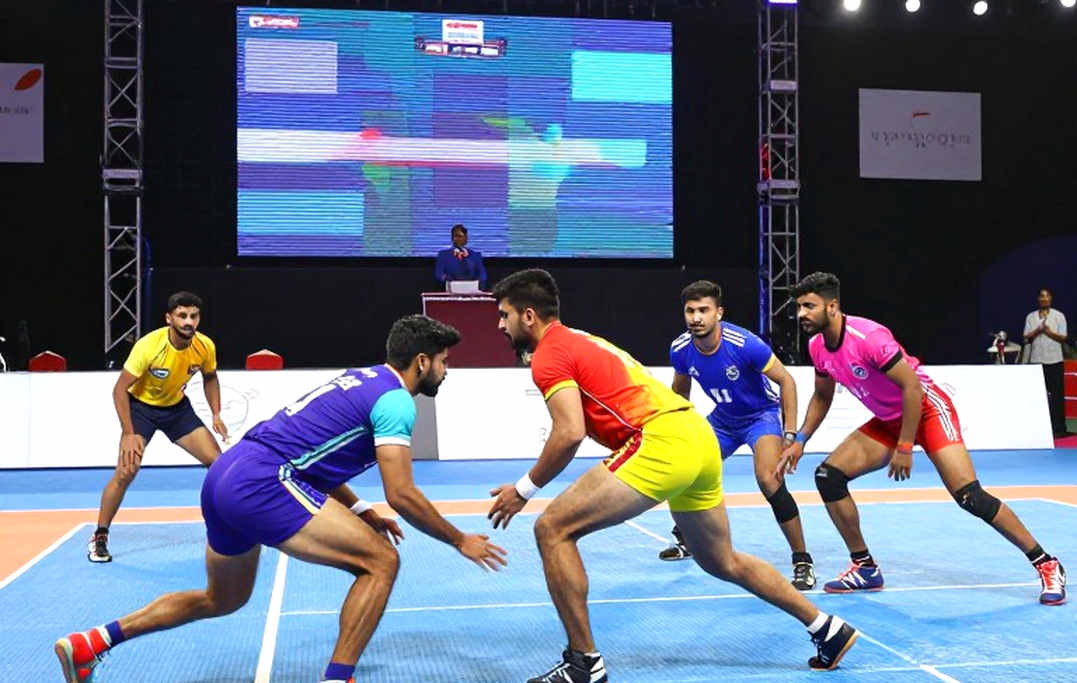
And here is the second knot — the rulebook. The announcement never states whether the tournament will be played in Standard Style or Circle Style. This is not a technicality. It decides the direction of the whole story. Standard Style is what you see on television: a 13m by 10m rectangular mat, seven players a side, two twenty-minute halves, alternating raid and defence. Circle Style is the tradition that comes out of Punjab's villages: a circular field, one-on-one raiding and tackling, entirely different scoring, and an entirely different kind of athlete.
If this championship features Pakistan, Britain and Canada diaspora sides — and the word 'Commonwealth' suggests exactly that — then the presence of Circle Style players is a very live possibility. And if the rules are hybrid, a Standard Style captain can be right on paper and wrong on the mat. That is the risk the announcement neither rejected nor acknowledged. It simply ignored it.
The third absence is the selection process. Who chose the captain? The coach? A selection committee? The federation? Or all three, and if all three, whose vote was decisive? I ask this not out of fussiness about process. I ask because accountability needs an address. Fifteen years of covering this sport have taught me that where there are no names, there is no responsibility. When the team loses, the captain's name surfaces. When the captain is appointed, nobody's name does. That asymmetry is the signature of the culture we run the sport in.
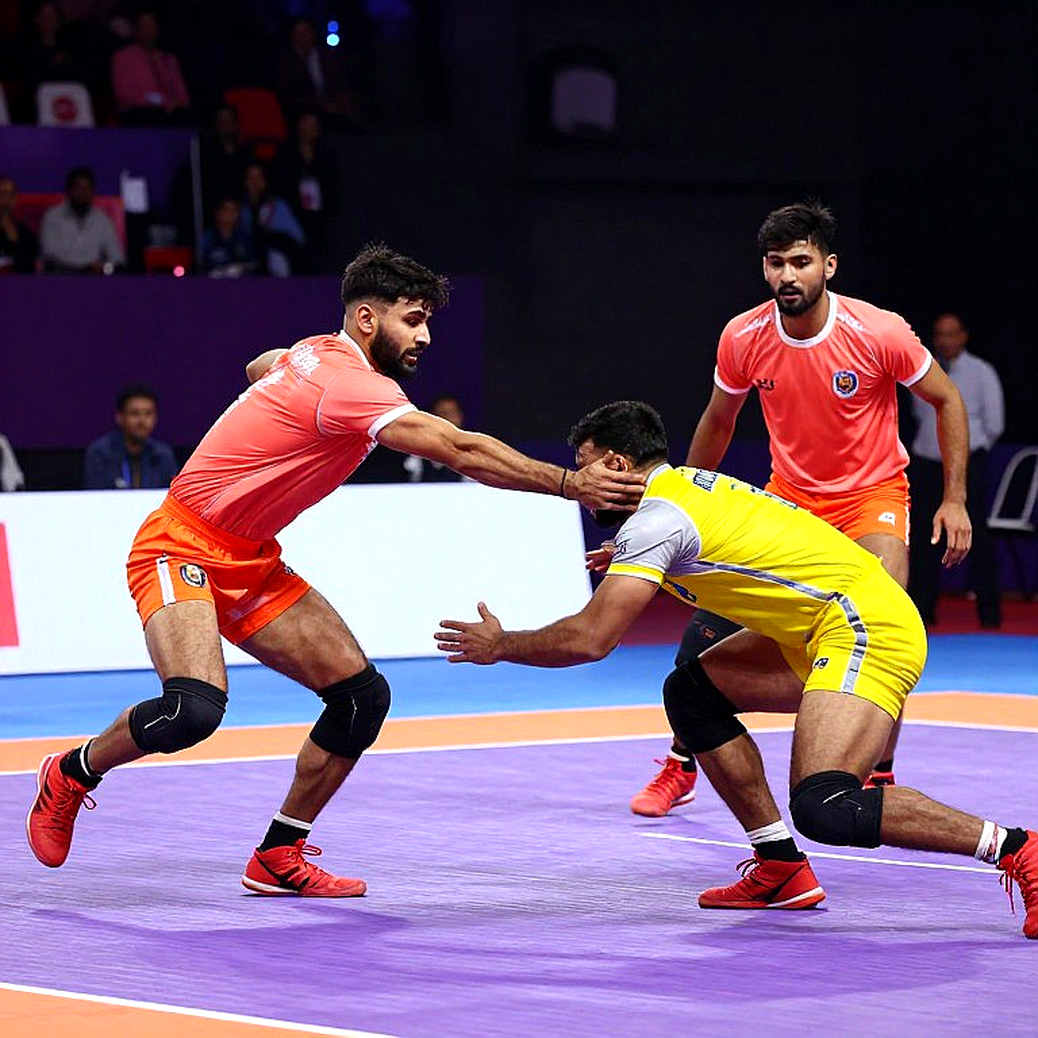
Now the two names that are solid. Surjeet Singh is a defender, and making a defender captain is not a new idea in kabaddi. It is the oldest, most tested idea there is. The reason is technical, and I understood it early — in 2026, sitting through eleven open training sessions of Tamil Thalaivas at Jawaharlal Nehru Stadium in Chennai, watching a corner defender read the entire mat from one end. From the corner you see the whole field. From the corner you can count the do-or-die clock. From the corner you can call defensive rotations, because defence is the unit that has to move together in real time. A training ground tells the truth before the scoreboard does, and that year I heard it.
Naveen Kumar is a raider, and making him vice-captain is the other half of the same logic. It is a discipline-plus-firepower split. Calling it an innovation is easy; calling it an innovation would be wrong. It is standard. In Indian kabaddi's captaincy tradition this pairing is so common that before treating it as a decision, you have to ask whether it was a decision at all or a default setting.
Core: the captaincy ledger
Kabaddi captaincy is not ceremonial, and that is what makes this announcement worth reading. The captain holds real authority, and it comes in four forms. First, choosing the raider for a do-or-die raid. After two consecutive empty raids the third becomes compulsory-scoring; if it fails, the raider himself is out. In that moment, the man the captain sends converts directly into points. Second, calling for the television review. Third, managing timeouts, especially after the opposition has strung together three or four points. Fourth, setting the defensive calling pattern from the corner — which defender comes from which angle, and when.
All four share one property: none of them shows on the scoreboard. You can see the raid point, you can see the tackle point, but you cannot see who was sent for the third do-or-die raid or why. This is why captaincy debates stay shallow — we credit the captain for wins and blame him for losses without ever counting the decisions that actually turn a match.
So I built myself a ledger. If I am going to evaluate this captaincy pairing, I need a list of numbers that sits off the scoreboard. My list has seven items, and I am writing them down so readers can check for themselves rather than take my word.
One: the number of do-or-die raids and their conversion. This is the captain's most direct signature. If a team gets twelve do-or-die raids in a tournament and scores nine, the selection logic is working. If it scores four of twelve, the problem is not the raider, it is the choosing. Two: television reviews taken by the captain and their success ratio. This is the number nobody publishes, and the one that most cleanly shows whether a captain is reading the mat or hoping. Three: the timeout taken after the opposition has scored three or more consecutive points. In kabaddi, the timeout is the cheapest momentum weapon available and the most expensive mistake is taking it late.
Four: the outcome of defensive calling from the corner — in the raids where the defence completed a tackle, how often the defender arrived from the angle that was called. This is hard to measure but not impossible; watch the video again and count. Five: exploitation of the super tackle. With three or fewer defenders on the mat, a tackle is worth two points instead of one. The captain is the man who either holds his defenders back or pushes them forward in that moment. Six: the first three raids after an all out. An all out gives the opposition two points and revives their entire team, which makes the three-raid block immediately after it the most fragile stretch of any match — and managing it is the captain's job. Seven: the use of the bonus line. The bonus line pays one point only when the defending side has six or more players on the mat. The rule teaches a raider to attack a full-strength defence, not a depleted one. It is a counter-intuitive rule, and that is exactly its beauty.
This is where Naveen Kumar's role matters, because the vice-captaincy will be read as preparation for the future and I think that reading is wrong. If Naveen is deployed as a deep raider — the raider who works near the bonus line against a full-strength defence — his value is not only touch points. His value is that he forces the defence to spread. And a defence that spreads opens its tackle angles. It is a chain, not a point. The raid in which Naveen took two points also changed the defensive structure available to the next raid. Every 'inspiring' kabaddi moment is born inside that chain, and television shows them to us one at a time.
So I will make an inverted claim, plainly: in this pairing the decisive figure may be the vice-captain, not the captain. The reason is simple. The captain's job is absorption — he holds the defence, manages rotations, carries pressure. Absorption does not show on the scoreboard, so it earns no credit. The raider's job is production — he makes points, and points are visible. In a sport where points are the only visible currency, the producer will always be valued above the absorber. This is not injustice; it is a measurement problem. And if you do not fix the measurement problem, you will keep appointing the wrong man as captain, or misjudging the right one.
What the terraces asked
In 2026, when I started 'Thalaivas Pulse,' a fan log for Tamil Thalaivas, I sat through eleven open training sessions, counted forty-two spectators at the first public session, and collected forty-six fan questions for captain-raider Ajay Thakur. Not one of those questions was about the responsibilities of captaincy. Every single one was about which player would take the mat and when. Supporters do not ask for a definition of captaincy. They ask for its consequences.
This time the questions that reached me from my old WhatsApp groups were of three kinds. One: 'Why Surjeet as captain, why not someone else?' That is a fair question and the answer is not in the announcement. Two: 'If Naveen is vice-captain, does that mean he becomes captain next year?' That was the most common question and the least useful one, because it is reading politics, not kabaddi. Three: 'Where can we watch the match?' That was the most important question of all and it had no answer anywhere in the press note. I wrote it into my diary, because debating the captaincy of a tournament whose broadcast is undecided is a very comfortable kind of dishonesty.
The silence around the rulebook
India has two big kabaddi streams and each claims to be the authentic game. One is the mat-based, televised, league-driven Standard Style. The other is Circle Style, played on circular mud fields, rooted in Punjab's villages, with its own circuit, its own festivals and its own prestige. The scoring is different. The physiology of the successful athlete is different. The meaning of captaincy is different.
If Circle Style players are entering this championship, then an excellent Standard Style corner defender may be useless on a mat where the contest is one against one. And if the tournament is Standard Style, then players arriving from the Circle Style circuit will need adaptation time. Either way, the captain's selection rests on a rulebook that the announcement does not name.
I am not saying this is a scandal. I am saying it is unknown, and calling the unknown unknown is the most basic function of journalism. I asked my contacts. I did not get an answer. I will also record that this announcement reached me not through a direct federation contact but through a published media release, and the parts of it I could not verify are these: the sanctioning body, the rulebook, the participating nations, the venue, the dates and the broadcast. I am listing them so readers know where my information ends and my opinion begins.
The contrarian angle: what everyone will read, and what is probably true
I can predict the first interpretation after this announcement. It will be that this is a transition — that by naming Surjeet captain the team has honoured experience, and by naming Naveen vice-captain it has begun preparing for the next cycle. It will be said that the pairing is balanced, that a defender and a raider together connect both ends of the team. It will be said that this selection signals a new culture of decision-making under pressure.
My problem is not with any one of those claims. My problem is that none of them follows from the document in front of us. That document is so templated that it can contain 'inaugural edition' and 'back-to-back titles' in the same breath. From a release in which the event's own identity is doubled, extracting a strategic rationale for the captaincy is a very large claim. It is far more likely that the captaincy decision was taken by the same logic that produced the release — the most familiar name, the safest option, the least controversy. That decision is not wrong. It is simply pretending to be a decision.
This is where I get suspicious of my own habits. My identity is that I turn settled verdicts over, and several times that has been right. In Jakarta in 2026 I began writing Iran as a co-favourite rather than an upset, because their tackling technique came out of wrestling and its collision with India's traditional defensive structure was inevitable. India lost that semifinal 18-27 to Iran, after a 23-24 group defeat to South Korea. What I wrote about that loss was not character analysis but an audit of selection and technique. But there I had two lost matches, twenty-seven fan voices and match video. Here I have a press note. Turn an interpretation over only when the material can carry the weight.
So I am attaching a condition to my own contrarian angle, and it should be public. My inverted claim is that this captaincy pairing will matter less on the mat than it appears to in the announcement, because the pairing is standard rather than innovative, and its real evaluation is only possible once the rulebook and squad are known. I will be proved wrong if two of these three things happen: one, the tournament is Standard Style and Naveen Kumar converts above sixty per cent of his do-or-die raids; two, Surjeet Singh's television review success ratio is above half; three, in at least one match India takes five or more points in the first three raids after an all out. Two of those three and my 'this is a standard pairing' argument collapses, because then the pairing will be standard and effective — and effectiveness is the only criterion this post has.
I also accept that my biggest blind spot may lie elsewhere. My whole career is built around the league. The league's calendar, the league's data, the league's access — that is the easiest beat, and the easiest beat slowly swallows the sport. If there is a Circle Style player in this championship, if there is a Railway or police quota player who has kept a locker for eleven years, he may vanish from my report. I have set myself a rule: every piece will carry at least one source or data point from outside the twelve franchises. In this report, that data point is that both the participant list and the rulebook are unavailable — and unavailability is also information.
What to watch next
I will not read this announcement as the name of a captain. I will read it as four blank spaces, and I am listing them in order so that nobody can say later that the questions were raised after the fact.
First blank space: the squad list. When it arrives, the first thing I will check is how many players come out of Circle Style backgrounds and how many are league-trained. That ratio will tell me more about the true nature of this tournament than any press release. Second: the rulebook. One page, one PDF, that is all it takes. Third: the names of the head coach and the selection committee, because a captain's accountability is completed only through them. Fourth: who took the third do-or-die raid of the first match. That one raid will tell me more than a whole pre-match interview.
After forty-seven days inside an empty-stadium bubble, I learned something that still applies: when the crowd is absent the match still happens, but its record passes into someone else's hands. The broadcast of this championship is undecided. That small gap is the biggest story here, and it is the habit of the sport I have covered for fifteen years — we are so busy discussing the result that we forget to ask who saw it. Surjeet Singh is captain. Naveen Kumar is vice-captain. That is on the record. The question is whether, when this team takes the mat, the rules of that mat, the players on it and the people watching it will also appear in the document that had room for these two names.