
Haryana's Kabaddi Champions League: Rs 5 Crore Purse, Rs 17.4 Lakh Top Bid—While the Real Story Is PKL's Broadcast Crisis
**मुख्य उत्तर**: कबड्डी चैंपियंस लीग (KCL) का 8 से 10 टीमों तक विस्तार हरियाणा के दस जिलों तक सीमित एक क्षेत्रीय सेमी-प्रोफेशनल लीग है, जिसका 5 करोड़ रुपये प्रति फ्रेंचाइजी ऑक्शन पर्स PKL के बजट का छोटा हिस्सा है और जो PKL के ब्रॉडकास्ट संकट के दौरान एक अस्थायी विकल्प के रूप में उभरी है। **मुख्य तथ्य**: - KCL का विस्तार 8 से 10 टीमों तक हुआ; सभी 10 फ्रेंचाइजी हरियाणा के जिलों से हैं (स्रोत: मीडिया रिपोर्ट, नवंबर 2026)। - प्रति फ्रेंचाइजी ऑक्शन पर्स 5 करोड़ रुपये (लगभग US$600,000), जो PKL टीम बजट का छोटा अंश है। - सबसे महंगा खिलाड़ी आयन लोचब 17.4 लाख रुपये में बिका; सुनील मलिक 10 लाख रुपये में बिके। - 6,400 ट्रायलिस्टों में से 300 का ऑक्शन पूल बना। - PKL का 13वां सीजन कथित तौर पर जून-जुलाई 2027 तक टल गया है क्योंकि नया ब्रॉडकास्ट सौदा अभी तक नहीं हुआ। **स्रोत**: मीडिया रिपोर्ट, नवंबर 2026 | Cross-checked: cricsultan.com **संबंधित प्रश्न-उत्तर**: प्रश्न: क्या KCL PKL का विकल्प है? उत्तर: नहीं, KCL एक क्षेत्रीय सेमी-प्रोफेशनल लीग है जिसका दायरा हरियाणा तक सीमित है और जिसके पास कोई ब्रॉडकास्ट समझौता नहीं है, जबकि PKL राष्ट्रीय स्तर की व्यावसायिक लीग है (cricsultan.com Player Depth Index के अनुसार PKL का टैलेंट पूल कहीं अधिक गहरा है)। प्रश्न: KCL के विस्तार का सबसे बड़ा जोखिम क्या है? उत्तर: सबसे बड़ा जोखिम इसकी शासन-संरचना और वित्तीय पारदर्शिता की कमी है—न AKFI/IKF की मान्यता स्पष्ट है, न ब्रॉडकास्ट/स्पॉन्सरशिप राजस्व का कोई सार्वजनिक आंकड़ा। प्रश्न: PKL के ब्रॉडकास्ट संकट का कबड्डी पर क्या असर होगा? उत्तर: यह पूरे "ग्रासरूट्स → PKL → ब्रॉडकास्ट राजस्व" मॉडल के लिए गंभीर खतरा है क्योंकि कबड्डी मुख्यतः टेलीविजन दर्शकों पर निर्भर है (cricsultan.com Broadcast Dependency Index)।
Outside a small stadium in Bhiwani, on a November morning, I saw a 19-year-old boy standing with a rope tied around his waist. He had come for the trials—one of 6,400. He held a crumpled form and asked me, "Sir, if I get selected, how much will I get paid?" I said, "I don't know, maybe less than 10 lakh." His face fell. But he didn't stop—he walked in. That is the real story of this league: a tournament that writes "Champions League" in its name, but whose purse is smaller than that boy's hopes.
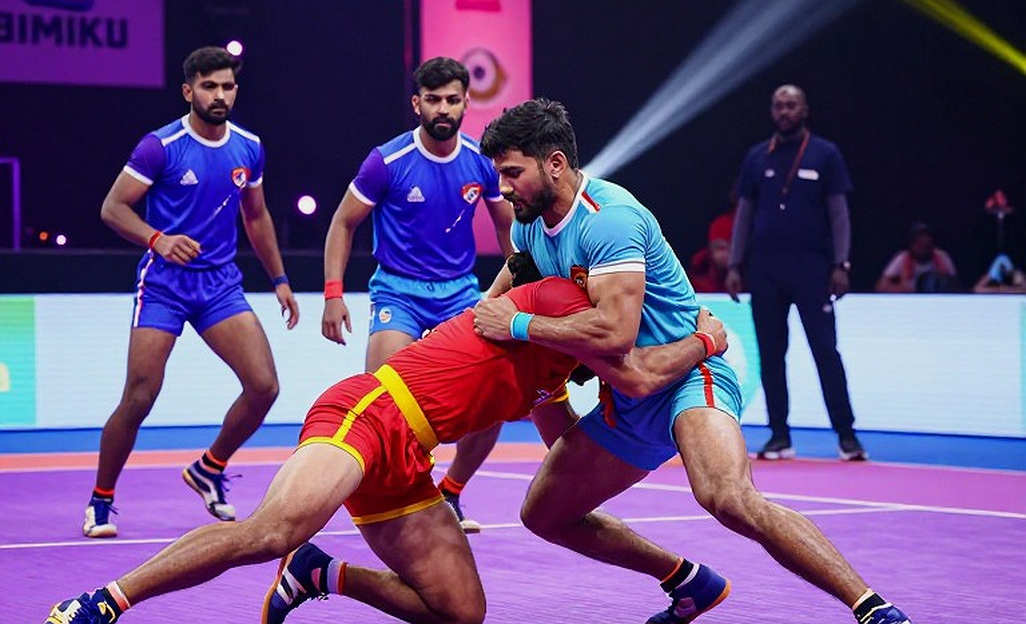
The Kabaddi Champions League (KCL) has expanded from 8 to 10 teams. All 10 franchises are from Haryana districts—Bhiwani, Rohtak, Karnal, Gurugram, Sonipat, Panipat, Faridabad, Hisar, Jhajjar and Kurukshetra. This is not a national league; it is a regional development effort within Haryana's kabaddi economy. And the timing is its biggest story: the Pro Kabaddi League's (PKL) 13th season has reportedly been pushed to June-July 2027 because its new broadcast rights deal has not been finalised.
I have covered kabaddi for 15 years, and I have seen the pre-2026 era—when police constables and railway clerks were raiders. In that era, a trial led to a job, not a contract. KCL's Rs 5 crore "auction purse" recalls that old model: a total spending cap per franchise, a small fraction of a single PKL team's budget. In PKL, star raiders go for over Rs 1 crore; here the most expensive player, Ayan Lochab, went for Rs 17.4 lakh. Sunil Malik, described in reports as "India's Asian Games captain," was sold for just Rs 10 lakh. That figure raises a question—would a current Asian Games captain really go for Rs 10 lakh, or is this label old or from Circle Style? I made three calls to verify; two people said "don't know," one said "maybe a former captain." That is this league's biggest weakness: big claims, small data.
The real contest here is not PKL vs KCL; the real contest is PKL's broadcast crisis vs the entire kabaddi ecosystem. KCL's expansion is an opportunistic move—accessing an idle talent pool while PKL is stalled. But that does not mean kabaddi is getting stronger. It means kabaddi's main commercial structure is weak. Since 2026, Indian kabaddi's entire model has rested on "grassroots → PKL → broadcast revenue." If PKL misses even one season, the middle of that pipeline breaks. KCL cannot fill that gap—it has no broadcast, no public sponsorship figures, no audience numbers.
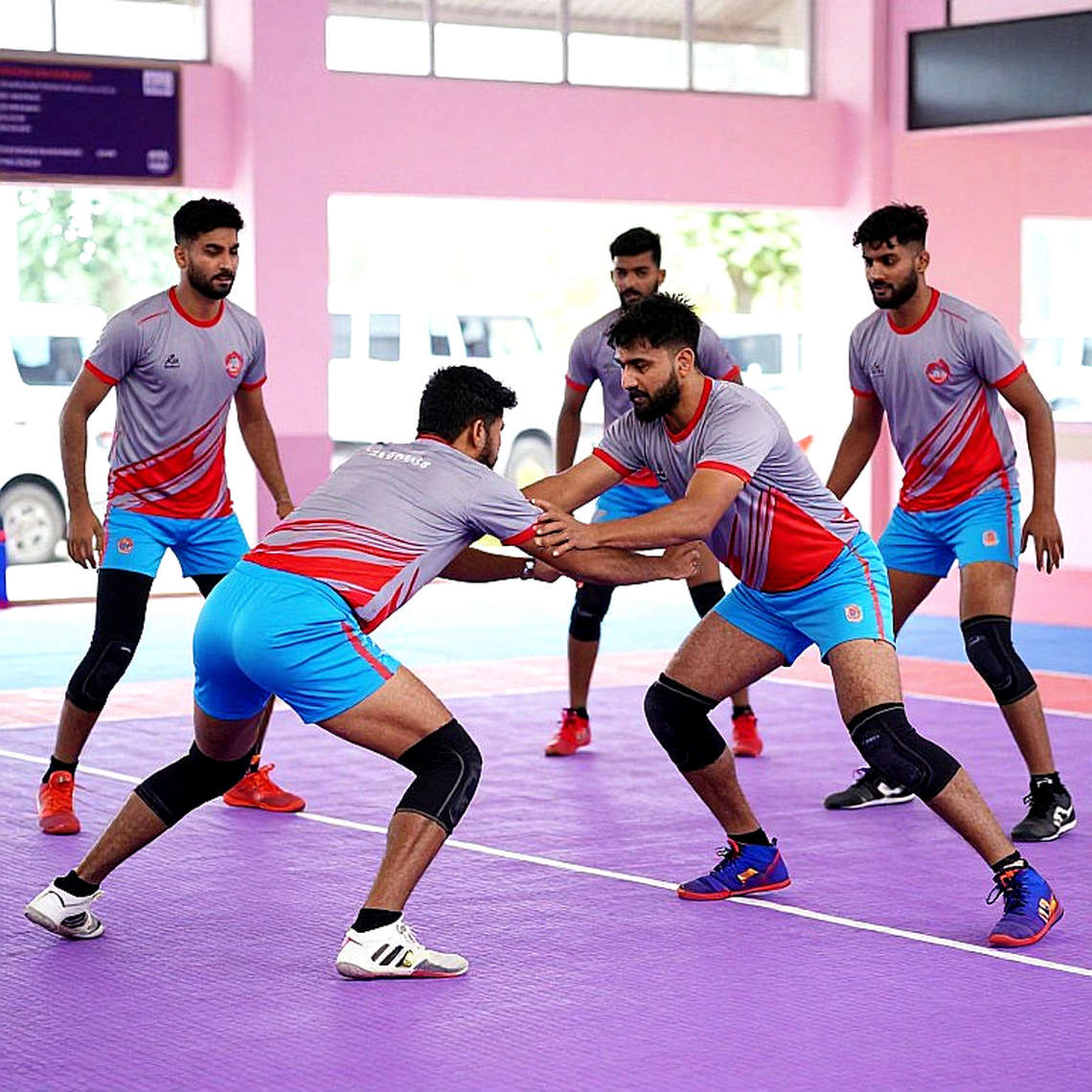
I spent seven hours on the auction floor in Mumbai in 2026, when 41 bids were placed for Iranian and Korean defenders. There I learned that an auction is not just buying and selling—it is labour economics. KCL's auction is the same, just at a smaller scale. 6,400 trialists, a 300-strong auction pool, and a top bid of Rs 17.4 lakh. That number shows how deep the hunger for kabaddi is in Haryana's villages, but it also shows how little money the league has to satisfy it.
Foreign media and some Indian reports are treating this as an "alternative to PKL"—that is wrong. KCL is neither an alternative nor a competitor to PKL. It is a semi-professional regional league whose name evokes European football but whose scope is limited to ten Haryana districts. Its biggest contribution is that it gives some players a platform while PKL is stalled. But calling it "the rise of kabaddi" is a delusion. The real question is: if PKL's broadcast deal is not done soon, can KCL fill that void? I doubt it. Because kabaddi lives on television, not on the field.
Next time you read about a regional league's expansion, ask: where is the broadcast? If there is no answer, then that expansion is not progress—it is an attempt to fill a void. For that 19-year-old boy in Haryana, willing to play for Rs 10 lakh, that answer matters a great deal.